
close
Choose Your Site
Global
Social Media


Views: 0 Author: Site Editor Publish Time: 2026-07-11 Origin: Site


Metallized PE film — abbreviated MPE in industry datasheets and VMPE in technical specifications — is a polyethylene substrate vacuum-deposited with a thin aluminum layer on one side. The aluminum is 30 to 80 nanometers thick, providing high reflectivity, low emissivity, and a moisture barrier in a single, low-cost, flexible material. For B2B buyers in building insulation, cold chain packaging, and industrial protective applications, MPE is the dominant reflective insulation and barrier film, with a track record of more than 30 years in residential, commercial, and industrial use.
The product is supplied on rolls, in widths from 1 m to 4 m for building applications and from 200 mm to 1,800 mm for packaging applications. The PE base substrate is typically LDPE or LLDPE for film applications, with mLLDPE used in higher-performance structures. The aluminum layer is applied by the same physical vapor deposition (PVD) process used for MPET, MCPP, and MOPP, but on a flexible, low-melting-point substrate that requires tighter process control.
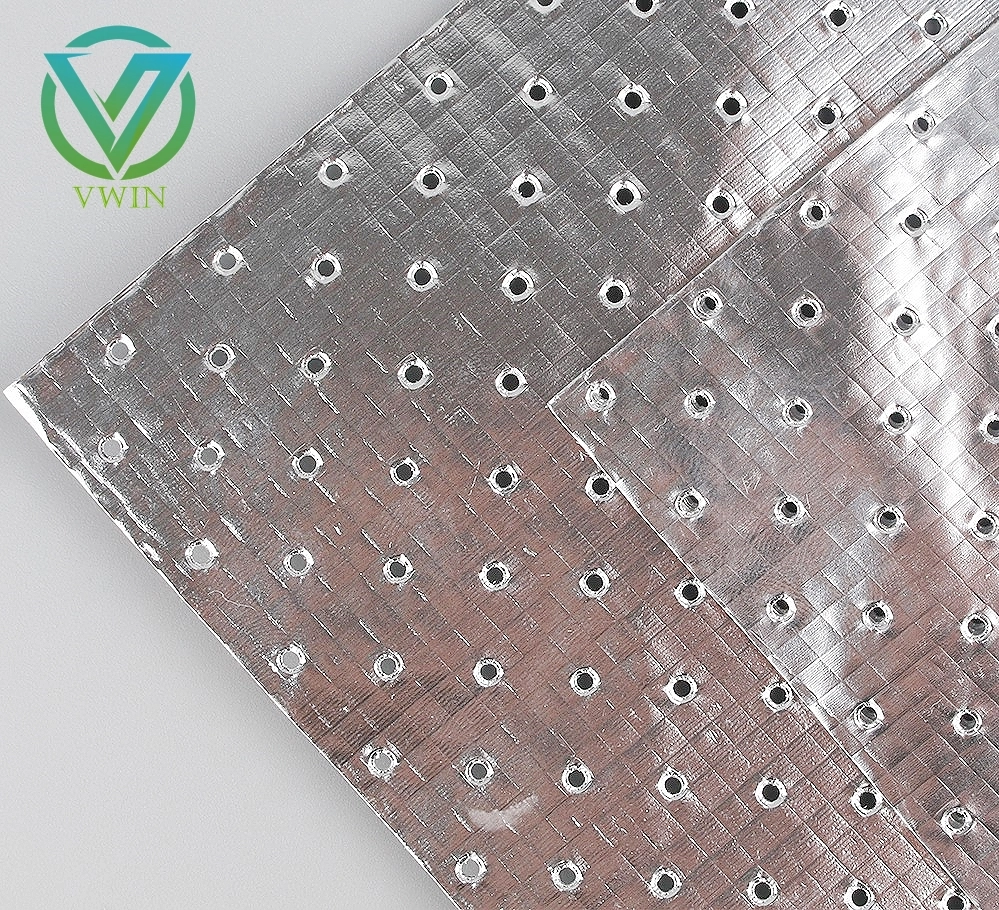
At Hangzhou VWIN Technology, MPE and MPE-based products are produced in widths up to 1,800 mm with controlled optical density and a range of aluminum adhesion levels. The company's Breathable Aluminum Foil Laminated Woven for Attic Insulation to Save Energy and Punched Two-Sided Aluminum Foil Laminated Woven Fabric for Attic Insulation demonstrate the use of MPE in woven fabric structures for building insulation, while Fire-Resistant Antiglare Double Aluminum Foil Woven for Roof Insulation Materials uses MPE in fire-resistant industrial applications.
The base substrate is a polyethylene film, typically produced by blown film or cast film extrusion. The most common grades for MPE are LDPE (low-density polyethylene) for general applications, LLDPE (linear low-density polyethylene) for higher tensile strength, and mLLDPE (metallocene LLDPE) for premium applications requiring downgauging without loss of mechanical properties.
PE is chosen as the substrate for MPE because of its low cost, flexibility, low temperature toughness, and excellent moisture barrier. The main drawback of PE compared to PET is its lower temperature resistance (melting point 110 to 130 degrees Celsius vs 260 degrees Celsius for PET), which limits MPE to applications below 100 degrees Celsius.
The aluminum layer is applied by the same PVD process used for MPET, but with tighter process control because the PE substrate is more sensitive to heat. The aluminum wire is resistively heated in a vacuum chamber (10 to the negative 3 to 10 to the negative 4 Pa) and condenses on the chilled PE film surface. The deposition rate is slower than for MPET to avoid substrate distortion, and the metallized film is typically post-treated (corona treatment) to improve ink and adhesive wettability.
The metallization process produces an MPE film with optical density 2.0 to 2.5 for general applications and 2.5 to 3.0 for high-barrier applications. The aluminum layer is typically 30 to 50 nanometers for building insulation and 50 to 80 nanometers for cold chain packaging.
A typical MPE for building insulation is a single-layer LDPE film (50 to 200 micron) with an aluminum layer on one side, supplied on rolls. For cold chain packaging, MPE is typically laminated with other films (PET, PE, BOPP) to provide additional mechanical strength, printability, or heat-sealability. For industrial applications, MPE is laminated with woven fabric (HDPE, PP) to produce a tear-resistant reflective insulation.
The aluminum layer on MPE delivers reflectivity above 95 percent for visible light and infrared radiation, and emissivity below 0.05. This combination is the basis for MPE's effectiveness as a radiant barrier in building insulation. A radiant barrier reduces heat transfer by radiation, which accounts for 30 to 50 percent of total heat transfer in a typical attic or wall assembly in summer conditions.
In building applications, MPE is typically installed as a single layer facing an air gap (typically 25 to 50 mm), where it reflects radiant heat back toward the source. The reflective performance is not affected by aging or humidity, making MPE a durable radiant barrier for the life of the building.
MPE delivers WVTR below 1 g/m²/day at 38 degrees Celsius and 90 percent RH, making it an effective moisture barrier for cold chain packaging and building applications. The aluminum layer is the primary moisture barrier, with the PE substrate providing additional protection and mechanical strength.
For cold chain applications, MPE is typically used in multi-layer laminates with PE or PP to provide puncture resistance, sealing properties, and durability during handling and transport. The moisture barrier performance is maintained through the lamination process, as long as the aluminum layer is not damaged during converting.
LDPE-based MPE delivers tensile strength of 15 to 25 MPa in the machine direction and 12 to 20 MPa in the transverse direction, with elongation at break of 300 to 600 percent. LLDPE-based MPE delivers higher tensile strength (25 to 35 MPa) with similar elongation. mLLDPE-based MPE delivers the highest tensile strength (35 to 50 MPa) with elongation above 500 percent, allowing downgauging from 100 micron to 50 micron without loss of mechanical performance.
MPE can be used in applications from -40 degrees Celsius to +80 degrees Celsius continuously, and up to 100 degrees Celsius for short periods. The aluminum layer remains stable across this range, and the PE substrate does not become brittle at low temperatures or distort at high temperatures within the specified range. This temperature range covers virtually all building insulation, cold chain packaging, and industrial protective applications.
The largest application for MPE is as a single-layer radiant barrier in attic insulation assemblies. The MPE is installed under the roof rafters, facing the attic air space, and reflects radiant heat from the sun-heated roof back toward the roof, reducing attic temperatures by 5 to 15 degrees Celsius in summer conditions. This reduces cooling load on the HVAC system and improves comfort in the living space below.
MPE-based attic radiant barriers deliver the highest energy savings in hot climates (ASHRAE zones 1 to 3) where summer cooling load dominates. In these climates, a properly installed MPE radiant barrier can reduce cooling energy consumption by 5 to 15 percent, with payback periods of 3 to 7 years.
MPE is used in wall assemblies as a continuous reflective insulation layer, typically in combination with bulk insulation (fiberglass, cellulose, mineral wool). The MPE reduces heat transfer by radiation, while the bulk insulation reduces heat transfer by conduction. The combination delivers 10 to 20 percent better thermal performance than bulk insulation alone, with a thinner wall assembly.
For wall applications, MPE is typically supplied in widths of 1 m to 1.5 m and is installed as a continuous layer behind the drywall or exterior cladding. The MPE may be perforated to allow vapor transmission, depending on the climate zone and the bulk insulation type.
MPE is used in floor assemblies over crawl spaces or unconditioned basements, where it reduces heat loss to the unconditioned space below. The reflective surface faces the floor framing or the bulk insulation above, and the air gap between the MPE and the floor sheathing provides additional insulating value. MPE in this application also serves as a vapor retarder, reducing moisture migration from the crawl space into the floor assembly.
MPE is used in insulated shipping containers for pharmaceutical, biotech, and specialty food cold chain shipments. The MPE is laminated with bubble film, PE foam, or non-woven fabric to produce a flexible insulated liner that maintains product temperature during 24 to 96 hours of shipping. The reflective surface reduces radiant heat transfer, while the bulk insulation reduces conductive heat transfer.
For pharmaceutical cold chain, MPE-based insulated shippers maintain 2 to 8 degrees Celsius for 48 to 96 hours with phase change material (PCM) coolants, meeting USP <1079> and ISTA 7E standards. The shippers are single-use, lightweight, and cost-effective compared to expanded polystyrene (EPS) foam containers.
MPE is used in food packaging for products requiring temperature control, such as frozen meals, ice cream, and ready-to-eat salads. The MPE is typically laminated with PET or BOPP for printability and PE for heat-sealability, producing a multi-layer pouch that maintains product temperature during transport and retail display.
The reflective surface of MPE reduces heat gain from ambient temperature, extending the time that the product remains at safe temperature. This is particularly important for frozen foods, where temperature excursions above -18 degrees Celsius can degrade quality and food safety.
MPE is used as an insulated liner in corrugated boxes for pharmaceutical and food shipments. The MPE is laminated with PE bubble film to produce a flexible, foldable liner that fits inside a standard corrugated shipping box. The liner provides 1 to 3 degrees Celsius of temperature reduction over 24 hours, which is sufficient for short-haul shipments and reduces the need for gel packs or dry ice.
MPE-based radiant barriers reduce cooling energy consumption by 5 to 15 percent in residential and commercial buildings, with the highest savings in hot climates. Over the 30+ year service life of a typical building radiant barrier, the cumulative energy savings are 50,000 to 150,000 kWh per building, equivalent to 25 to 75 metric tons of CO2 emissions avoided. This makes MPE one of the highest-leverage energy efficiency investments available in building construction.
MPE is theoretically recyclable as a polyethylene film, but the thin aluminum layer complicates the recycling process. Most recycling streams cannot separate the aluminum from the PE at high yield, and the metallized film is typically downcycled into lower-value applications (plastic lumber, trash bags) rather than recycled into new film.
New recycling technologies, including chemical delamination and pyrolysis, are being developed to recover both the PE and the aluminum from metallized films. These technologies are expected to reach commercial scale by 2027 to 2030 and would significantly improve the sustainability profile of MPE and other metallized films.
MPE has a carbon footprint of approximately 2.0 to 3.0 kg CO2e per kg of film, including the aluminum layer. The energy savings from MPE-based radiant barriers offset the embodied carbon in 6 to 18 months in typical building applications, making MPE a carbon-positive material over its service life.
The global MPE market is forecast to grow at 4.5 to 6.0 percent CAGR through 2028, driven by demand for energy-efficient buildings, pharmaceutical cold chain, and temperature-sensitive food packaging. The largest growth segments are in Asia-Pacific (China, India, Southeast Asia) where building codes are tightening and cold chain infrastructure is expanding.
Building codes in hot climate zones (US, Middle East, Australia, India) are increasingly requiring or incentivizing radiant barriers in residential and commercial construction. ASHRAE 90.1, the International Energy Conservation Code (IECC), and equivalent international standards are tightening thermal envelope requirements, driving MPE demand.
Pharmaceutical cold chain regulations (USP <1079>, EU GDP) are also driving MPE demand for insulated shipping containers. The growth of biologics, vaccines, and cell therapies — all requiring strict temperature control — is creating a new high-value market segment for MPE-based insulated shippers.
The most significant technical trend in MPE is the development of nano-coated aluminum layers that are 10 to 20 nanometers thick (vs 30 to 80 nanometers in standard MPE), reducing aluminum consumption by 50 to 75 percent while maintaining barrier and reflectivity. Nano-coated MPE is expected to reach commercial scale by 2027.
A second trend is the development of breathable MPE for building applications, with controlled vapor transmission that allows the wall assembly to dry while maintaining the radiant barrier function. Breathable MPE is particularly important in cold climate buildings where vapor drive is from inside to outside.
A residential homebuilder in Florida installed MPE radiant barriers in 2,400 homes over 5 years, reducing average cooling energy consumption by 12 percent and qualifying the homes for ENERGY STAR certification. The MPE was sourced from Hangzhou VWIN at 1.5 m width with 100 micron LDPE substrate and 2.3 optical density. Total project value exceeded USD 8 million in MPE sales.
A pharmaceutical cold chain shipper qualified an MPE-based insulated liner for 2 to 8 degrees Celsius shipments of biologics. The liner maintained temperature for 72 hours with PCM coolant, passing ISTA 7E and USP <1079> testing. The MPE was laminated with PE bubble film and a Tyvek outer layer for tear resistance.
A premium frozen meal brand in Europe replaced expanded polystyrene (EPS) foam containers with MPE-based insulated boxes, reducing packaging weight by 65 percent and packaging cost by 40 percent. The MPE box maintained product temperature for 36 hours during last-mile delivery, meeting food safety standards. The brand saved approximately EUR 1.2 million per year in packaging costs.
Symptom: The aluminum layer cracks or delaminates during adhesive lamination, reducing barrier performance. Cause: Excessive lamination tension or too low a substrate temperature during converting. Fix: Reduce lamination tension by 10 to 20 percent; pre-warm the MPE roll to 25 to 30 degrees Celsius before lamination.
Symptom: The finished MPE-based insulation shows reflectivity below 90 percent. Cause: Damage to the aluminum layer during converting, or insufficient aluminum deposition. Fix: Request optical density data from supplier; reduce converting tension; inspect for converting damage.
Symptom: MPE film punctures during building installation. Cause: Insufficient substrate thickness, or rough handling during installation. Fix: Use thicker MPE (150 to 200 micron) for high-traffic installation sites; train installers on proper handling.
Verify the supplier's annual production capacity (in million square meters) and lead time for your width and gauge. A reliable MPE supplier should have 20+ million square meters of annual capacity and lead times under 14 days for stock items.
Request ISO 9001 certificate, reflectivity and emissivity test reports, optical density data, and a sample COA from a recent production batch. For building applications, request fire performance certification (ASTM E84, EN 13501) if required by local code.
For non-standard widths, optical densities, or pre-laminated MPE structures, verify the supplier's R&D capability and minimum order quantity. A flexible supplier will accept custom orders at 5,000 to 10,000 square meters MOQ.
Hangzhou VWIN produces MPE in widths from 1 m to 1,800 mm, with optical densities across the 2.0 to 2.5 range. The company's Breathable Aluminum Foil Laminated Woven for Attic Insulation to Save Energy is a reference product in the MPE-based woven fabric range for building applications, with annual capacity exceeding 30 million square meters.
Standard MPE delivers emissivity below 0.05, with high-performance grades below 0.03. This is the basis for MPE's effectiveness as a radiant barrier in building applications.
MPE has a service life of 30+ years in building applications, with no significant degradation of reflectivity or emissivity. The aluminum layer is protected by the PE substrate and is not affected by humidity, temperature cycling, or UV exposure when installed behind a covering layer.
MPE is produced under food contact compliance for many applications, but the specific compliance depends on the PE grade and aluminum treatment. Request a Declaration of Compliance from the supplier for the specific application.
Custom MPE (non-standard width, optical density, or pre-laminated structure) typically ships within 21 to 30 days from purchase order. Stock items usually ship within 7 to 14 days.
Standard MPE is not fire-resistant — it will burn like standard PE film. Fire-resistant MPE is available with flame retardant additives and is rated ASTM E84 Class A or B. Hangzhou VWIN's Fire-Resistant Antiglare Double Aluminum Foil Woven is an example of fire-resistant MPE-based product.
MPE is theoretically recyclable as a polyethylene film, but the thin aluminum layer complicates the recycling process. Most MPE ends up in landfill or is downcycled into lower-value applications. New chemical recycling technologies are expected to improve MPE recyclability by 2027 to 2030.
MPE uses a polyethylene base, which is flexible, low-cost, and suitable for temperatures up to 80 degrees Celsius. MPET uses a polyester base, which is stiffer, more expensive, and suitable for temperatures up to 200 degrees Celsius. MPE is preferred for building and cold chain applications, while MPET is preferred for food packaging and retort applications.
For B2B buyers interested in MPE and related insulation materials from Hangzhou VWIN, the following products share the same metallization technology:
• Breathable Aluminum Foil Laminated Woven for Attic Insulation to Save Energy — breathable MPE-based woven fabric for attic insulation
• Punched Two-Sided Aluminum Foil Laminated Woven Fabric for Attic Insulation — perforated MPE-based woven fabric for attic insulation
• Fire-Resistant Antiglare Double Aluminum Foil Woven for Roof Insulation Materials — fire-resistant MPE-based woven fabric for industrial insulation
Metallized PE film is the dominant reflective insulation and cold chain barrier material, with 30+ years of proven performance in building, packaging, and industrial applications. For B2B buyers, the key to sourcing high-quality MPE is verifying optical density, reflectivity, emissivity, and customization capability, and selecting a supplier with the production capacity to support consistent supply at competitive cost.
Hangzhou VWIN Technology produces MPE in widths up to 1,800 mm and woven fabric structures for building insulation, with annual capacity exceeding 30 million square meters. The company supports both stock and custom MPE orders with 7 to 30 day lead times, backed by ISO 9001 quality management and full technical documentation.
Reflective insulation demand in North America and Europe is forecast to grow at 4.5 to 6.0 percent CAGR through 2028, supported by energy code updates (IRC 2024, ASHRAE 90.1-2022) that require continuous insulation in attics and walls. Cold chain barrier demand is growing at 6 to 8 percent CAGR as pharmaceutical and fresh produce supply chains expand. For B2B buyers, the priority when sourcing MPE is to confirm reflectivity, emissivity, and width availability; request Declaration of Compliance for food-contact applications; and qualify at least two suppliers to manage supply risk. Hangzhou VWIN's Breathable Aluminum Foil Laminated Woven for Attic Insulation is a complementary product line for buyers who also need breathable radiant barriers.


