
close
Choose Your Site
Global
Social Media


Views: 0 Author: Site Editor Publish Time: 2026-07-13 Origin: Site


Metallized OPP film — abbreviated MOPP in industry datasheets and VMOPP in technical specifications — is a biaxially oriented polypropylene (BOPP) substrate vacuum-deposited with a thin aluminum layer on one side. The aluminum is 30 to 80 nanometers thick, providing high gloss, high reflectivity, and a moisture barrier in a single, stiff, printable material. For B2B converters in the label industry and premium flexible packaging, MOPP is the dominant metallized face stock for pressure-sensitive labels, wrap-around labels, and high-gloss packaging applications.
The key advantage of MOPP over other metallized films (MPET, MPE, MCPP) is its combination of high gloss (above 90 percent at 60 degree angle), high stiffness (modulus above 2,000 MPa), and excellent printability on the unmetallized side. These properties make MOPP the preferred face stock for premium labels on beverages, cosmetics, and consumer electronics, where shelf appeal is a primary selection criterion.
At Hangzhou VWIN Technology, MOPP and related metallized films are produced in widths up to 1,800 mm with controlled optical density and high-gloss surface finish. The company's broader portfolio includes Heat-insulating Waterproof Silver Breathable Night Curtain with Round Cover for Open Display Cooler, Premium Food-Grade Aluminum Foil Master Roll for Bakery Chain, and Fire-Resistant Double Aluminum Foil Woven for Roof Insulation, demonstrating the breadth of metallization technology applications.
The base substrate is a biaxially oriented polypropylene film, produced by extruding PP resin into a sheet and stretching it sequentially in the machine direction (MD) and transverse direction (TD). The orientation aligns the polymer chains, producing a film with high tensile strength (150 to 200 MPa in MD, 250 to 300 MPa in TD), high stiffness (modulus 2,000 to 3,500 MPa), and excellent dimensional stability across temperature and humidity changes.
BOPP is the workhorse substrate for label and packaging films because of its combination of stiffness, clarity, gloss, and moisture barrier. The most common gauges for MOPP are 15, 20, 25, 30, 40, and 50 microns, with 20 to 30 micron being the workhorse for label face stock and 30 to 50 micron for flexible packaging.
The aluminum layer is applied by the same PVD process used for MPET, MPE, and MCPP, with the deposition rate and web tension tuned for the BOPP substrate's stiffness and dimensional stability. The metallization chamber is operated at 10 to the negative 3 to 10 to the negative 4 Pa, with deposition rates that deliver optical density 2.0 to 2.5 for general applications and 2.5 to 3.0 for high-barrier applications.
The BOPP substrate is more dimensionally stable than PE or CPP, allowing the metallization process to run at higher speeds (400 to 600 m/min) than for MPE or MCPP. The metallized film is post-treated with corona treatment (42 dynes per cm minimum) on the unmetallized side to improve ink wettability for printing.
A typical 20 micron MOPP consists of the BOPP base (19.5 to 19.8 micron) and the aluminum layer (30 to 80 nanometers), with the balance made up of any post-treatment coating. The yield is 50 to 53 m²/kg for 20 micron and 33 to 35 m²/kg for 30 micron. Yield is a key cost metric for label converters and should be specified and validated against incoming roll weights.
The metallized surface of MOPP delivers gloss above 90 percent at 60 degree angle (compared to 70 to 80 percent for plain BOPP and 30 to 50 percent for MPET). The high gloss is the primary visual selling point of MOPP, making it the preferred face stock for premium labels on beverages, cosmetics, and consumer electronics.
The reflectivity of MOPP is above 95 percent for visible light and infrared, similar to other metallized films. The combination of high gloss and high reflectivity gives MOPP labels a distinctive "mirror finish" appearance that stands out on retail shelves.
BOPP-based MOPP delivers high stiffness (modulus 2,000 to 3,500 MPa) and excellent dimensional stability across temperature and humidity changes. The stiffness allows MOPP labels to be applied at high speeds on standard label dispensing equipment, with no curling or wrinkling. The dimensional stability ensures that the label maintains its shape and registration during printing, die-cutting, and application.
For label applications requiring very high stiffness (such as beverage labels applied at high speed), thicker MOPP (30 to 50 micron) is used. For flexible packaging applications where conformability is required (such as contour-fit labels on squeeze tubes), thinner MOPP (15 to 20 micron) is used.
The unmetallized side of MOPP is corona-treated to 42 dynes per cm minimum, providing excellent ink wettability for water-based, solvent-based, and UV-curable inks. The treated surface can be printed by flexography, gravure, offset, and digital methods, with full-color graphics and fine text reproduction.
For premium label applications requiring high-definition graphics (such as wine and spirits labels), MOPP is typically top-coated with a print-receptive layer that further improves ink adhesion and gloss. The top coat is applied during film production and is supplied as a standard option on most MOPP grades.
The aluminum layer on MOPP delivers OTR below 1 cc/m²/day at 23 degrees Celsius and 50 percent RH and WVTR below 0.5 g/m²/day at 38 degrees Celsius and 90 percent RH. These numbers place MOPP in the "high barrier" category, though MOPP is rarely used as a primary barrier in flexible packaging. MOPP is most commonly used as a label face stock or as the outer layer in multi-layer laminates, where the barrier performance is a secondary benefit.
The largest application for MOPP is pressure-sensitive label face stock, used in beverage (water, soft drinks, beer, wine, spirits), cosmetic, personal care, and consumer electronics labels. MOPP is supplied in 25 to 50 micron gauges with high-gloss aluminum finish, and is laminated with adhesive and release liner to produce the final label stock.
The metallized surface provides the high-gloss "mirror finish" appearance that consumers associate with premium products, while the BOPP base provides the stiffness and dimensional stability required for high-speed label dispensing. The adhesive is typically acrylic emulsion (for general purpose) or rubber-based hot melt (for beverage labels applied at high speed).
MOPP is used for wrap-around labels on beverage bottles (PET, glass), where the label is applied as a continuous strip that wraps around the bottle. The high stiffness of MOPP ensures that the label maintains its shape during application and throughout the bottle's shelf life. The metallized surface provides the high-gloss appearance, and the white or colored print layer on the unmetallized side provides the brand graphics.
For wrap-around labels on PET bottles that are hot-filled or pasteurized, MOPP is the preferred face stock because of its high temperature resistance (BOPP can survive 100 degrees Celsius short-term exposure).
MOPP is used for in-mold labels in injection molding and blow molding processes, where the label is placed in the mold before the plastic is injected or blown. The label fuses with the plastic container during the molding process, producing a permanent, scratch-resistant label with no adhesive. MOPP is the preferred face stock for IML on food containers, cosmetic containers, and industrial containers.
The metallized surface of MOPP in IML applications provides the high-gloss "no-label" appearance that is popular for premium food and cosmetic packaging. The BOPP base withstands the injection molding temperatures (200 to 280 degrees Celsius) and the chemical resistance of the molten plastic.
MOPP is used as the outer layer in premium flexible packaging for snacks, confectionery, and dry food, where the high-gloss metallized surface provides shelf appeal. Common structures include MOPP/MPET/PE (20/12/60) for premium snack pouches and MOPP/MPET/MCPP (20/12/60) for retort-ready premium food pouches. The MOPP outer layer provides the high-gloss finish, the MPET provides the barrier, and the PE or MCPP provides the heat-seal.
The most significant sustainability development in MOPP-based packaging is the shift toward mono-material PP structures designed for mechanical recycling. Traditional PET/MOPP/PE laminates cannot be recycled through standard PP streams because the PET and aluminum contaminate the recyclate. New mono-material designs — such as MOPP/MCPP or MOPP/CPP — allow the entire structure to enter the same PP recycling stream, with the metallized MOPP layer recovered as a small fraction of the recyclate.
Major FMCG brands including Nestle, Unilever, and Mondelez have committed to 100 percent recyclable or reusable packaging by 2025 to 2030, and MOPP plays a central role in delivering high-gloss recyclable PP structures. The barrier loss in moving from foil to MOPP in mono-material structures is partially offset by the recyclability premium in markets with EPR regulations.
A 20 micron MOPP has a carbon footprint of approximately 2.5 to 3.5 kg CO2e per kg of film, similar to MPET. The carbon advantage of MOPP-based structures over foil-based structures is 30 to 45 percent, primarily because of the energy savings from replacing 7 to 9 micron aluminum foil with 30 to 80 nanometer of vacuum-deposited aluminum.
Post-consumer recycled (PCR) PP can be used as the base substrate for new MOPP, though the optical clarity and barrier performance of PCR-derived MOPP are typically 10 to 15 percent below virgin-grade material. For non-food label applications (cosmetic, personal care, industrial), PCR content is generally acceptable up to 50 to 100 percent. For food-contact label applications, PCR content is generally limited to 30 to 50 percent under EU and FDA guidance.
Global demand for MOPP is forecast to grow at 4.5 to 5.5 percent CAGR through 2028, driven by demand for premium labels in beverages, cosmetics, and consumer electronics, and for premium flexible packaging in snack and confectionery. The largest growth segments are in Asia-Pacific (China, India, Southeast Asia) where middle-class consumption is driving demand for premium packaging.
Extended Producer Responsibility (EPR) regulations in the EU, Canada, and several US states are creating pricing signals that favor recyclable MOPP-based PP structures over non-recyclable foil laminates. The EU's PPWR will require all packaging to be recyclable by 2030, with significant penalties for non-compliance. This regulatory pressure is accelerating the MOPP substitution of foil in premium label and packaging applications.
The most visible technical trend is the use of high-barrier clear coatings (SiOx, AlOx) on MOPP to push OTR below 0.1 cc/m²/day, matching foil performance for pharmaceutical and high-end food applications. A second trend is the development of "label-on-label" structures that allow multiple labels to be applied to the same container, reducing the total packaging weight.
A premium bottled water brand in Europe switched from paper labels to MOPP labels for its 500 ml and 1 L bottles, reducing label weight by 60 percent and improving label appearance. The MOPP labels survived the bottle pasteurization process (80 degrees Celsius for 20 minutes) and the high-speed label application (600 bottles per minute). Brand recognition improved measurably, with consumer surveys showing 18 percent higher brand recall compared to the paper label.
A premium cosmetic brand qualified MOPP for in-mold labels on its 200 ml shampoo bottles, replacing a paper-based in-mold label and improving label durability. The MOPP label survived the injection molding process (240 degrees Celsius) and provided a high-gloss "no-label" appearance. Label cost increased 15 percent, but brand perception and shelf appeal improved measurably.
A premium snack brand in North America used a MOPP/MPET/PE (20/12/60) structure for its stand-up pouches, replacing a foil-based structure and reducing packaging cost by 25 percent. The MOPP outer layer provided the high-gloss shelf appeal, and the 18 month shelf life target was maintained. The brand qualified for the How2Recycle store-drop recycling program in North America.
Symptom: Ink does not adhere properly to the unmetallized side of MOPP, causing print defects. Cause: Insufficient corona treatment or aging of the corona treatment. Fix: Verify corona dyne level is 42+; use MOPP within 6 months of production; re-treat the surface with corona if needed.
Symptom: The MOPP film curls after metallization, causing registration issues in printing and lamination. Cause: Uneven aluminum deposition or excessive residual stress. Fix: Request optical density data and uniformity data from supplier; reduce converting tension; condition the roll at 25 degrees Celsius for 24 hours before converting.
Symptom: The finished MOPP label shows gloss below 85 percent. Cause: Damage to the aluminum layer during converting, or insufficient aluminum deposition. Fix: Request gloss data from supplier; reduce converting tension; inspect for converting damage.
Verify the supplier's annual production capacity (in million square meters) and current lead time for your gauge and width. A reliable MOPP supplier should have 20+ million square meters of annual capacity and lead times under 14 days for stock items.
Request the following documents before placing a trial order: ISO 9001 certificate, optical density test reports, gloss test reports, and a sample COA from a recent production batch. For label applications, request FDA compliance documentation if the label is for food or pharmaceutical products.
For non-standard widths, optical densities, gloss levels, or pre-laminated MOPP structures, verify the supplier's R&D capability and minimum order quantity. A flexible supplier will accept custom orders at 5,000 to 10,000 square meters MOQ.
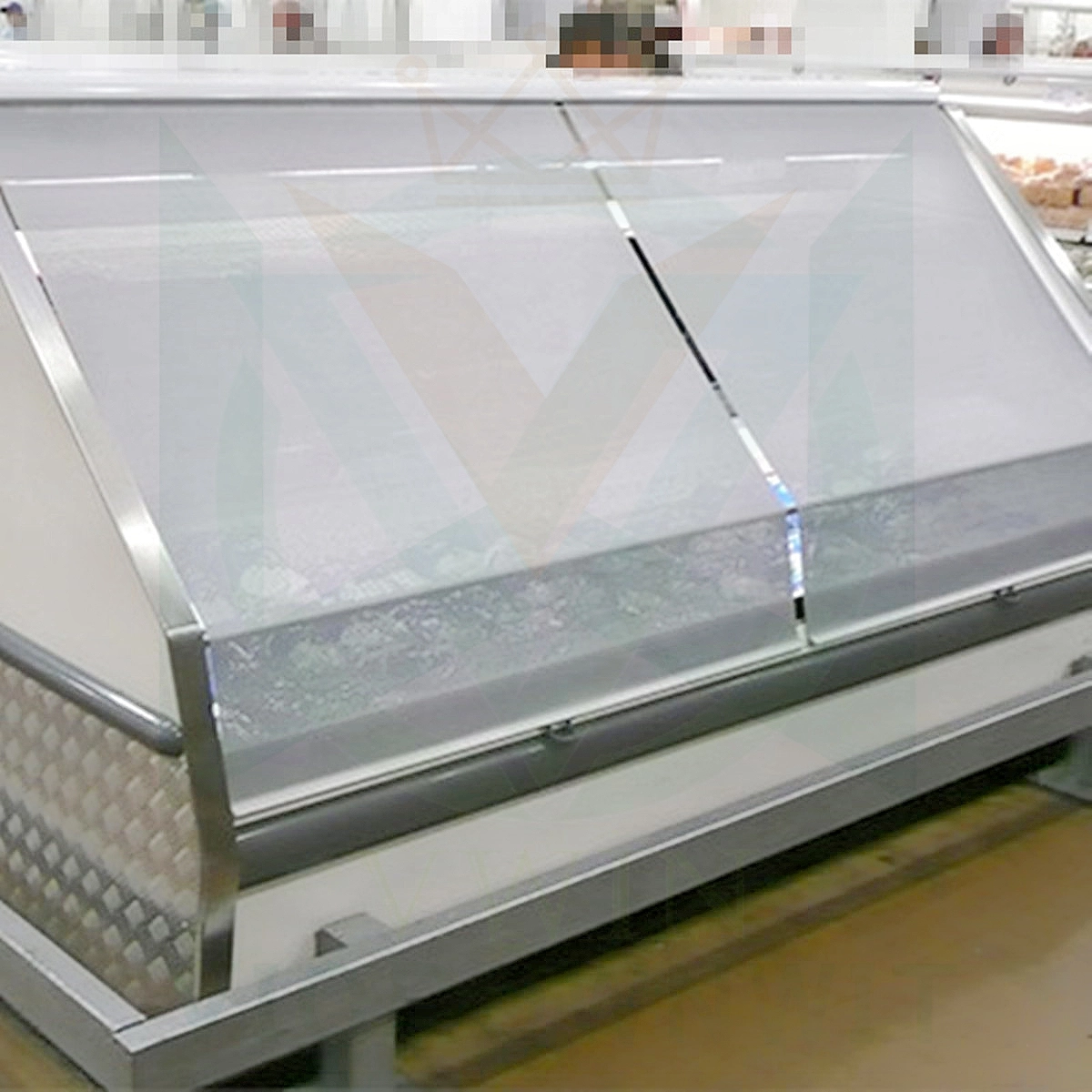
Hangzhou VWIN produces MOPP in widths from 200 mm to 1,800 mm, with standard gauges of 15, 20, 25, 30, 40, and 50 microns. Optical density is calibrated to customer specification across the 2.0 to 3.0 range. The company's Heat-insulating Waterproof Silver Breathable Night Curtain with Round Cover for Open Display Cooler demonstrates the use of MOPP-based films in retail display applications, where high gloss and reflectivity are key selection criteria.
MOPP uses a biaxially oriented polypropylene base, which is stiffer, glossier, and more moisture-resistant, but less heat-resistant and less oxygen-barrier. MPET uses a polyester base, which is less stiff, less glossy, and less moisture-resistant, but more heat-resistant and more oxygen-barrier. MOPP is preferred for label face stock, while MPET is preferred for food packaging and retort.
MOPP is not recommended for retort pouches that undergo 121 degree Celsius sterilization, because BOPP has a heat distortion temperature of 90 to 100 degrees Celsius. For retort pouches, MPET or MCPP is preferred. MOPP can be used in non-retort high-barrier pouches (snack, confectionery, dry food) where heat resistance is not required.
Standard MOPP delivers gloss above 90 percent at 60 degree angle, with high-gloss grades above 95 percent. The gloss is the primary visual selling point of MOPP for premium label and packaging applications.
MOPP is produced under food contact compliance for many applications, but the specific compliance depends on the PP grade and aluminum treatment. Request a Declaration of Compliance from the supplier for the specific application. For food-contact label applications, FDA 21 CFR compliance is typically required.
A 20 micron MOPP delivers OTR below 1 cc/m²/day at 23 degrees Celsius and 50 percent RH. The barrier performance is sufficient for most label and packaging applications where the primary barrier is provided by the underlying structure.
Custom MOPP (non-standard width, optical density, or pre-laminated structure) typically ships within 21 to 30 days from purchase order. Stock items usually ship within 7 to 14 days.
MOPP is theoretically recyclable as a polypropylene film, but the thin aluminum layer complicates the recycling process. Mono-material PP structures (MOPP/CPP, MOPP/MCPP) are recyclable through standard PP streams. Multi-layer laminates with mixed polymer types are not recyclable through standard streams.
MOPP uses a biaxially oriented polypropylene base, which is stiffer, glossier, and lower-cost, but less heat-resistant. MPET uses a polyester base, which is less stiff, less glossy, and higher-cost, but more heat-resistant. MOPP is preferred for label face stock and premium packaging, while MPET is preferred for retort and high-barrier food packaging.
For B2B buyers interested in MOPP and related high-gloss metallized materials from Hangzhou VWIN, the following products share the same metallization technology:
• Heat-insulating Waterproof Silver Breathable Night Curtain with Round Cover for Open Display Cooler — MOPP-based film for retail display applications
• Premium Food-Grade Extra Wide Extra Long Aluminum Foil Master Roll for Bakery Chain & Catering Wholesale — food-grade foil master roll for bakery and catering
• Breathable Round Hookah Aluminum Foil Sheet in Blue Box — breathable foil sheets for hookah and retail applications
Metallized OPP film is the dominant high-gloss metallized face stock for premium labels and flexible packaging, delivering the distinctive "mirror finish" appearance that consumers associate with premium products. For B2B converters, the key to sourcing high-quality MOPP is verifying gloss, optical density, stiffness, and customization capability, and selecting a supplier with the production capacity to support consistent supply at competitive cost.
Hangzhou VWIN Technology produces MOPP in widths up to 1,800 mm with annual capacity exceeding 30 million square meters, supported by ISO 9001 quality management and full technical documentation. The company supports both stock and custom MOPP orders with 7 to 30 day lead times. Request a sample COA and trial order to qualify MOPP for your specific label or packaging application.
The global pressure-sensitive label market is forecast to grow at 4.5 to 6.0 percent CAGR through 2028, driven by beverage, personal care, and pharmaceutical demand. Metallized OPP film captures the largest share of premium wrap-around and cut-and-stack labels because of its high gloss (90+ gloss units at 60 degrees) and metal-stamp-like reflectivity. Sustainability initiatives from major brands (Coca-Cola, P&G, Unilever) are pushing the industry toward mono-material PP structures (MOPP/CPP, MOPP/MCPP) that are fully recyclable in the polypropylene stream. B2B converters should evaluate clear barrier coatings (SiOx, AlOx) on MOPP for oxygen-sensitive applications, as these maintain recyclability while adding OTR below 1 cc/m²/day. For trial orders, request COA, sample rolls in 500-meter minimum quantity, and confirm UV-resistance data for outdoor label applications.


