
close
Choose Your Site
Global
Social Media


Views: 0 Author: Site Editor Publish Time: 2026-06-03 Origin: Site


Open-case refrigerators create immense operational vulnerabilities during non-business hours. Uncontained cold air continuously spills into empty aisles. Ambient heat forces compressors into relentless, margin-draining cycles. You cannot afford this hidden waste. The Breathable Night Blind acts as a highly effective physical barrier. It temporarily converts exposed shelves into closed systems using low-capex materials. You achieve immediate high-yield returns.
This buyer’s guide explores the complex thermodynamics and mechanical requirements of commercial-grade night covers. We evaluate realistic return on investment metrics. You will learn exactly how woven aluminum fabrics protect perishables. We reveal why specific mechanical features matter most for long-term reliability.
Targeted Energy Efficiency: Deploying a breathable night blind can reduce off-hour energy consumption by up to 35%, directly lowering utility overhead.
Thermodynamic Superiority: Breathable, woven aluminum fabrics prevent condensation and mold buildup (bio-films) compared to solid plastic alternatives.
Zero-Downtime Integration: Modern units utilize snap-in brackets and magnetic mounts, allowing seamless retrofitting on existing supermarket equipment without specialized labor.
Asset Protection: Features like damped springs (speed reducers) and anodized aluminum bottom bars significantly extend the mechanical lifespan of the blinds.
Retailers rely heavily on open refrigeration designs for daytime merchandising. These units make products highly visible and easily accessible. Customers grab items quickly. However, this optimal daytime setup becomes fundamentally inefficient after hours. When the store closes, exposed shelves bleed profit. The cold chain breaks down entirely at the retail floor level.
Escaping cold air pools uselessly on the floor. Ambient heat constantly infiltrates the chilled zone. Many store owners mistakenly assume their HVAC systems handle this overflow efficiently. They do not. The open case continuously fights the store's ambient temperature. Refrigeration compressors must work overtime to compensate. They run in continuous, stressful cycles. This heavy overload drastically accelerates equipment wear. Maintenance calls increase rapidly. You end up replacing expensive mechanical parts much sooner than expected. Overworked compressors consume massive amounts of electricity. Your utility bills skyrocket overnight.
Temperature fluctuations pose another severe risk. Temperature-sensitive inventory suffers silently. Meat, dairy, and fresh produce require highly stable environments. When ambient heat enters the open case, surface temperatures rise. Bacteria multiply faster under these conditions. Products lose their visual appeal quickly. This rapid spoilage directly increases your shrinkage rate. Discarding unsellable goods destroys your profit margins completely.
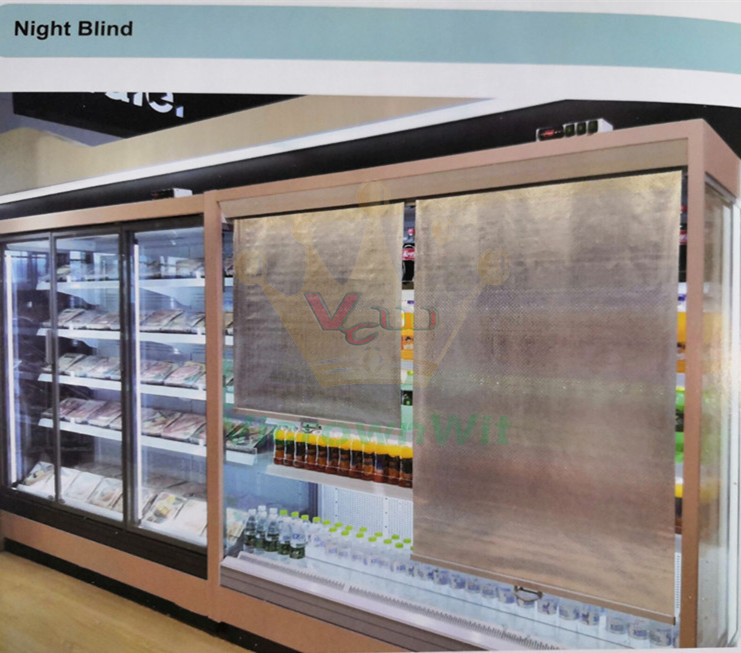
Thermal reflection involves straightforward but powerful physics. Woven aluminum fabric serves as a highly efficient barrier. It reflects ambient infrared heat away from your chilled zones. Heat bounces off the engineered metallic surface. It never reaches your delicate inventory. Your refrigeration system maintains set temperatures effortlessly without fighting external heat loads.
We must address the imperative of breathability. Many buyers mistakenly choose solid plastic covers. Solid plastics create terrible micro-climates. They trap moisture completely inside the cabinet. Condensation builds rapidly on the underside. Frost develops aggressively across your product packaging. This trapped moisture breeds mold and harmful bio-films. It creates a sanitation nightmare.
Breathable designs solve this perfectly. They feature micro-perforations or specially engineered weave densities. Manufacturers calibrate these tiny gaps to match specific airflow dynamics. They allow controlled air pressure equalization. Localized airflow prevents moisture buildup. Your display cases remain dry, clean, and highly sanitary.
Proper airflow dynamics also prevent dangerous air stratification. When cold air sinks and warm air rises uncontrollably, temperatures stratify. The bottom shelves freeze solid while the top shelves spoil. A breathable barrier stabilizes this internal micro-climate. It contains the chilled air effectively across all shelving tiers. It preserves the absolute integrity of your perishable goods.
Calculating realistic returns requires accurate baseline metrics. You can expect significant utility reductions almost immediately. Standard installations yield 20% to 35% overnight savings. Your actual results depend on ambient supermarket conditions. HVAC synergy plays a major role in final performance. Sometimes these numbers peak even higher in poorly insulated aisles. Every kilowatt saved goes directly to your bottom line. We consider this a mandatory energy saving strategy for modern retail.
Consistent temperature maintenance does more than meet basic compliance metrics. It directly extends product shelf life. Stable temperatures keep produce crisp. Dairy products remain safe longer. Meat retains its desirable red color instead of oxidizing. You experience noticeably less inventory loss. Reduced shrinkage translates into immediate revenue protection.
Consider the major labor reallocation benefits. Historically, staff moved perishable stock to backroom cold storage nightly. This archaic process wastes countless man-hours. It physically exhausts your employees. Products suffer damage during transit. A simple pull-down mechanism changes everything. Staff deploy the physical barrier in seconds. They spend their valuable time on merchandising or deep cleaning instead.
Metric Area | Without Night Blind | With Breathable Night Blind | Expected Impact |
|---|---|---|---|
Overnight Energy Use | 100% (Baseline) | 65% - 80% | 20-35% Reduction |
Nightly Labor Time | 90+ minutes | Under 5 minutes | Instant Reallocation |
Compressor Cycles | Continuous/Heavy | Intermittent/Light | Extended Lifespan |
Not all covers survive the daily retail grind. You must evaluate specific fabrication standards. We heavily advise buyers to mandate true woven aluminum. Avoid cheap reflective plastics completely. Plastics tear easily. They degrade quickly under constant handling. You should also verify the presence of anti-bacterial coatings. These coatings prevent hazardous microbial growth on the fabric itself. They make daily sanitation routines completely effortless.
Mechanical durability hinges entirely on the retraction system. You must insist on built-in speed reducers. Engineers refer to these as damped springs. Untethered springs retract violently when released. Fast snap-backs tear fabrics immediately. They break internal hardware components. Uniform, slow retraction prevents these sudden mechanical shocks. Damped systems protect your initial investment daily.
We must also inspect hardware and casing quality closely. You need anodized aluminum guide rails. Anodization prevents corrosion in damp commercial environments. Look closely at the bottom bars. They must feature tear-resistant designs. A sturdy bottom bar keeps the fabric taut across the opening. It prevents edge fraying during repeated use.
Woven Aluminum Substrate: Ensures high infrared reflection and long-term structural integrity.
Anti-Bacterial Coating: Actively repels bio-films, surface mold, and persistent odors.
Damped Spring Mechanism: Guarantees uniform, controlled retraction speeds every time.
Anodized Guide Rails: Resists rust and maintains smooth operational glide.
Buyers often hesitate due to potential operational downtime. Retailers cannot afford to empty cases during business hours. Modern installation logistics eliminate this worry completely. You do not need specialized labor or heavy tools. Innovative magnetic mounting options exist today. Snap-in brackets allow rapid, drill-free retrofitting. You can install these units on legacy chillers easily. New OEM displays accept them seamlessly. You experience zero store disruption.
Global shipping presents hidden procurement risks. B2B transactions often suffer from transit damage. Flimsy cardboard fails during rough ocean freight. You must demand robust packaging standards from your suppliers. Reputable manufacturers utilize thick pearl cotton wrapping. They employ reinforced wooden casings. These protective measures ensure zero-loss delivery. Your equipment arrives pristine and ready for immediate deployment.
We recommend a highly structured rollout approach. Do not overhaul the entire store immediately. You should initiate a targeted pilot program first. Choose a few high-drain aisles. Dairy and fresh meat sections work best. Establish a localized baseline for energy reduction. Measure the actual kilowatt drop over thirty days. Gather feedback from your night crew regarding ease of use. Once you validate the savings, proceed confidently with a chain-wide rollout.
Phase | Action Required | Objective |
|---|---|---|
Phase 1 | Identify high-drain display cases (e.g., dairy, meats). | Target areas yielding maximum potential utility savings. |
Phase 2 | Install using drill-free magnetic mounts or snap-in brackets. | Ensure zero operational downtime during the retrofitting process. |
Phase 3 | Monitor energy consumption for 30 consecutive days. | Establish an accurate, localized baseline before chain-wide expansion. |
A breathable barrier represents more than a simple commercial accessory. It serves as an essential component of modern retail energy management. These engineered covers transform inefficient open cases into optimized closed systems. They protect your inventory and your margins.
We remind decision-makers to prioritize specific features carefully. You must focus on mechanical durability above all else. Damping systems prevent catastrophic hardware failures. You must also prioritize thermodynamic design. Breathability stops condensation and protects food safety. These specific elements ensure a much faster, disruption-free payback period.
Take action today. Audit your current off-hour energy expenditure immediately. Review your nightly labor processes. Consult a reputable manufacturer regarding custom sizing options. Explore your specific retrofitting feasibility. You have the power to stop overnight profit leaks right now.
A: Yes, utilizing universal snap-in brackets or high-strength magnetic mounts designed specifically for legacy unit retrofitting.
A: Solid materials trap moisture, leading to condensation, frost build-up, and potential mold, whereas breathable woven aluminum allows localized airflow while reflecting heat.
A: Commercial-grade models integrate speed reducers or damped springs within the roller mechanism to ensure a controlled, uniform retraction.
A: While dependent on local utility rates and equipment age, the energy reduction typically covers the initial low-capex investment within the first few operating cycles.


