
close
Choose Your Site
Global
Social Media


Views: 0 Author: Site Editor Publish Time: 2026-06-30 Origin: Site


High-value industrial equipment faces severe environmental threats during global transit. These shipments range from sensitive aerospace components to massive heavy machinery. They frequently encounter harsh moisture, extreme thermal cycling, and aggressive chemical exposure. Traditional packaging materials struggle to survive these conditions. Cloth-backed tapes shrink and peel over time. Messy mastic sealants demand long curing times and risk contaminating delicate parts.
You need a better alternative to ensure product safety. Engineered pressure-sensitive adhesive (PSA) metallic tapes provide verifiable, long-lasting protection. They conform tightly to irregular surfaces and establish a secure environmental block. For procurement and packaging engineers evaluating protective solutions, understanding the specific technical properties of this tape is critical. You must guarantee asset integrity and maintain strict industry compliance. Proper material selection prevents catastrophic and costly transit damage. We will explore tape specifications, application methods, and procurement strategies to elevate your shipping operations.
Industrial packaging environments expose materials to brutal conditions. Standard cloth-backed tapes, commonly known as duct tapes, routinely fail here. They shrink as temperatures fluctuate. They lose adhesion rapidly in high humidity. Ultraviolet light degrades their rubber-based adhesives within weeks. You might consider liquid sealants or mastics as an alternative. However, mastics require extensive surface preparation. They demand lengthy curing times before you can move the equipment. Furthermore, liquid mastics pose a severe risk of contaminating sensitive mechanical parts.
The PSA foil solution eliminates these workflow bottlenecks. Dead-soft metallic foil molds perfectly to irregular machinery profiles. It wraps around complex valves and sharp corners with ease. When you apply a high-quality Aluminum Foil Tape, you achieve an instant, permanent bond. You do not need to wait for anything to cure. Your packaging line keeps moving efficiently.
We must also examine the cost-to-failure ratio. Premium foil tape costs slightly more than generic packaging tape. However, this minimal upfront cost offsets massive downstream risks. Imagine the catastrophic failure of a multi-million dollar turbine rusting during international shipping. Moisture ingress destroys structural integrity. A reliable foil wrapper acts as cheap insurance against these extreme financial losses.
Finally, consider the environmental and lifecycle factors. Foil tapes are highly durable and chemically resistant. They survive ocean freight conditions effortlessly. They are also more sustainable. Manufacturers can often recycle aluminum components. This provides a distinct eco-friendly advantage over heavy, non-recyclable polymer alternatives.
Heavy machinery requires specialized packaging strategies. You cannot rely on a single wrapping method for every threat. Foil tapes serve multiple protective roles across different industrial sectors. We detail the primary applications below.
Ocean freight exposes equipment to constant moisture. Crews use foil tapes to seal joints in heavy-duty export crating. They also use them to secure massive shrink-wrap systems. The tape serves as an impermeable barrier against incoming water vapor. This definitive moisture block prevents condensation. It stops aggressive mold growth inside the crates. Packaging engineers frequently evaluate these applications against rigorous ASTM C1136-10 standards.
Open-air transport subjects equipment to drastic temperature swings. You must protect sensitive electronic or hydraulic components from thermal shock. Foil tape acts as a highly effective radiant heat reflector. It integrates seamlessly with fiberglass and bulk insulation materials. This combination creates a robust thermal shield for exposed machinery.
Modern industrial equipment relies heavily on complex electronics. Programmable Logic Controllers (PLCs) and avionics systems are highly sensitive. Electromagnetic interference (EMI) during transit can corrupt their programming. Foil tape safeguards these delicate assets. It maintains the electrical integrity of Faraday cage packaging configurations. The metallic carrier blocks disruptive radio frequencies effectively.
Aerospace and marine equipment often sit on open shipping decks. They face relentless salt spray, toxic chemical exposure, and hydraulic fluid leaks. Engineers use tape to mask critical joints, vulnerable valves, and exposed flanges. The metallic surface repels harsh UV rays and resists chemical degradation.
| Environmental Threat | Vulnerable Equipment | Tape Defense Mechanism |
|---|---|---|
| High Humidity & Salt Spray | Raw steel parts, gears, marine engines | Creates an absolute vapor block; prevents oxidation. |
| Radiant Heat & UV Exposure | Hydraulic hoses, plastic housings | Reflects UV rays; disperses concentrated heat. |
| Electromagnetic Interference | PLCs, avionics, sensors | Completes Faraday cages; blocks RFI/EMI signals. |
| Chemical & Fluid Spills | Aerospace joints, exposed flanges | Provides a non-porous chemical shield. |
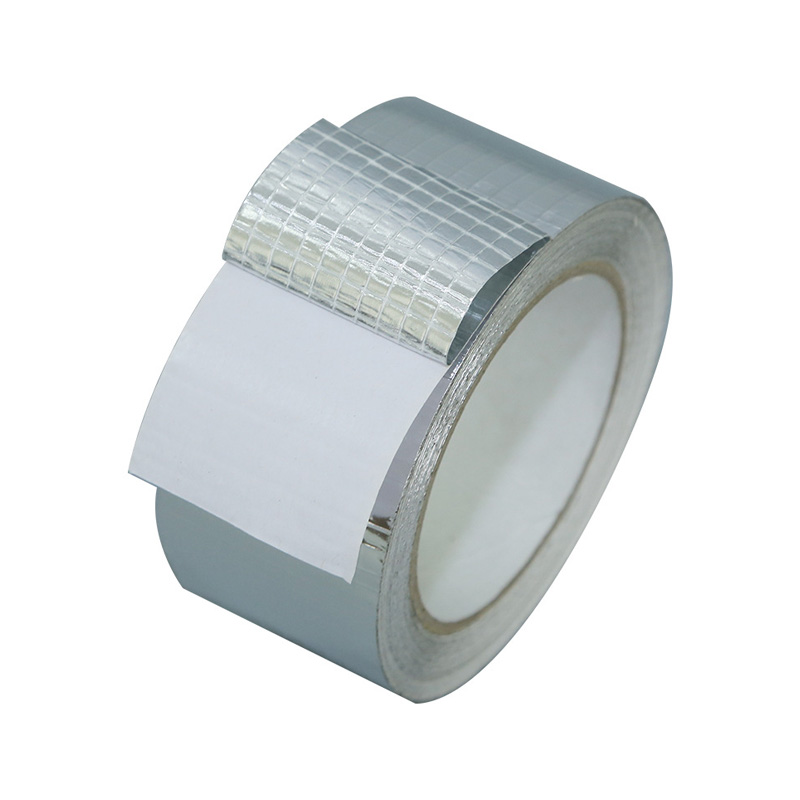
You cannot treat metallic tape as a generic commodity. Proper selection depends on rigorous engineering criteria. You must evaluate the adhesive chemistry, the substrate alloy, and any required backing reinforcements.
The adhesive layer dictates the tape's survival in extreme conditions. Manufacturers utilize three primary chemical families.
| Adhesive Type | Key Characteristics | Ideal Industrial Use Case |
|---|---|---|
| Acrylic | Superior UV resistance, weatherability, and longevity. Resists aging. | Long-term outdoor storage, extreme temperature shifts. |
| Rubber | High initial tack. Bonds quickly to many surfaces. Degrades under UV. | Fast-paced indoor packing lines, short-term staging. |
| Silicone | Extreme flexibility and ultra-high-temperature resistance (up to 600°F). | Specialized aerospace packaging, extreme heat proximity. |
For most global shipping needs, acrylic adhesives perform best. They reach maximum adhesion quickly and resist long-term environmental aging. Rubber adhesives work well for temporary, indoor tasks but fail rapidly outdoors. Reserve silicone adhesives for highly specialized, high-heat scenarios.
The metal foil itself carries distinct specifications. Industrial manufacturers typically utilize 8011, 1235, or 1100 aluminum alloys. These alloys provide the necessary dead-soft characteristics. The optimal carrier thickness generally ranges from 1.5 to 3.0 mils. This measurement excludes the adhesive layer. You must balance physical flexibility with structural tensile strength. A thicker foil resists puncturing but struggles to wrap tight corners.
Heavy cargo sometimes demands extra mechanical strength. Plain foil might tear under severe vibration. You can specify reinforced variations to solve this.
Even the highest-grade tape fails if applied incorrectly. Human error accounts for most packaging breaches. You must standardize your application protocols to guarantee success.
The reliability of any pressure-sensitive adhesive dictates strict cleanliness. The application surface must be completely free of contaminants. You must thoroughly clean the metal, plastic, or shrink-wrap before taping. Remove all machine oils, condensation, and warehouse dust. The adhesive forms a molecular bond only on a pristine surface.
Applying the tape requires proper physical technique. Do not simply lay it down lightly.
Temperature affects application heavily. Standard adhesives fail to bond if applied below 50°F (10°C). The adhesive hardens and loses its tack. If you package equipment in unheated winter warehouses, you face high failure rates. You must explicitly specify "Cold Weather" acrylic tapes. These engineered formulations stay tacky and bond securely down to 35°F (1.7°C) or lower.
You must also consider unpacking realities. Ensure the tape's adhesive chemistry is compatible with the equipment's surface coatings. Aggressive adhesives can cause ghosting on painted metal. They might even peel the paint away upon removal. Test a small, inconspicuous area first if you wrap highly sensitive painted assets directly.
Procurement teams often struggle to differentiate tape products. Marketing labels like "heavy-duty" or "industrial-strength" mean very little. You must evaluate verified specifications over generic marketing claims.
Look closely at the Technical Data Sheet (TDS). Check the verified tensile strength to ensure it withstands transit vibration. Review the peel strength, typically measured in ounces per inch (oz/in²). High peel strength indicates a reliable, long-lasting bond. Always confirm the specific temperature operating thresholds match your shipping route.
Industry standards provide excellent procurement baselines. Look for the following certifications:
Do not buy premium tape for every minor task. Strategically segment your purchasing to optimize packaging budgets.
Aluminum foil tape is clearly not a generic packaging commodity. It operates as a highly engineered component within the industrial packaging ecosystem. Proper selection dictates whether your heavy machinery survives global transit or suffers catastrophic corrosion. By understanding adhesive chemistry and backing reinforcements, you equip your team to make informed, risk-mitigating decisions.
For mission-critical equipment, always prioritize acrylic-based, dead-soft aluminum tapes. Demand verified ASTM or UL ratings to guarantee a fail-safe vapor barrier and reliable thermal shield. Do not let cheap materials compromise expensive industrial assets.
Take action to improve your current packaging protocols:
A: Duct tape utilizes a cloth backing and rubber adhesive that shrinks, dries out, and fails under UV light and temperature shifts. Foil tape uses a metallic carrier and (typically) acrylic adhesive, providing permanent environmental resistance and zero shrinkage.
A: It depends on the adhesive. High-quality acrylics usually peel cleanly if removed properly, whereas rubber-based tapes or butyls may leave a sticky residue requiring solvent cleanup. For highly sensitive surfaces, test a small area first.
A: No. While the tape provides a waterproof barrier once applied, the initial application requires a dry, oil-free surface for the pressure-sensitive adhesive to form a molecular bond.
A: Standard aluminum foil tape is thermally and electrically conductive on the foil side, but the adhesive layer typically acts as an insulator. If electrical conductivity through the tape is required (e.g., for EMI grounding), a specialized "conductive adhesive" foil tape must be specified.


