
close
Choose Your Site
Global
Social Media


Views: 0 Author: Site Editor Publish Time: 2026-06-20 Origin: Site


Managing radiant heat transfer in commercial and residential roofing poses a daily challenge. Contractors must maintain strict vapor control while ensuring structural durability against extreme weather. Finding a reliable membrane solves these primary issues. A specialized Aluminum Foil Laminated Woven material provides a highly durable, dual-function solution. It acts simultaneously as an effective radiant barrier and a tough vapor retarder. Its high-tensile backing resists tearing during intense job site conditions. Buyers, contractors, and facility managers face countless exaggerated thermal performance claims daily. We aim to provide an objective framework to help you evaluate, specify, and source the correct membrane. You will learn the mechanical advantages of this material and how to choose the right configuration. We will also explore critical sourcing metrics and proper installation techniques to prevent failure. You can protect your structures effectively.
Aluminum foil laminated woven fabric blocks up to 97% of radiant heat but requires an adequate air gap to function properly.
Woven polymer backing prevents the tearing and delamination issues common with standard foil papers during installation.
Procurement decisions should weigh single-sided versus double-sided configurations based on specific climate needs and roof sarking requirements.
Mitigating condensation risks requires precise taping, overlapping, and integration with the building's overall thermal envelope.
Supplier evaluation must prioritize verifiable fire retardancy (FR) certifications and accurate GSM (Grams per Square Meter) specifications.
Traditional bulk materials like fiberglass and foam serve distinct purposes. They excel at slowing conductive heat transfer through wall and roof cavities. However, they struggle immensely against direct summer radiant heat loads. The sun beats down on metal and tile roofs relentlessly. Heat radiates directly into attic spaces. Bulk materials eventually saturate and pass this heat downward. We need modern materials capable of bouncing this radiation away before it enters the structure.
Unreinforced foil tears easily during active roof installation. Contractors accidentally step on the membrane while maneuvering across rafters. Strong wind gusts easily rip fragile paper backings. A polyethylene or polypropylene woven matrix solves this entirely. This woven base provides essential structural tear resistance. It holds up under high-stress roofing applications and aggressive mechanical fastening. You no longer have to patch accidental punctures constantly during a busy project.
You get incredible synergistic performance from this laminated structure. The shiny surface acts as a highly reflective barrier to reject downward radiant energy. Meanwhile, the strong polymer membrane creates a durable weatherization barrier. It keeps rain and wind out during the exposed construction phase. This dual-action capability makes it an indispensable tool for modern roofing.
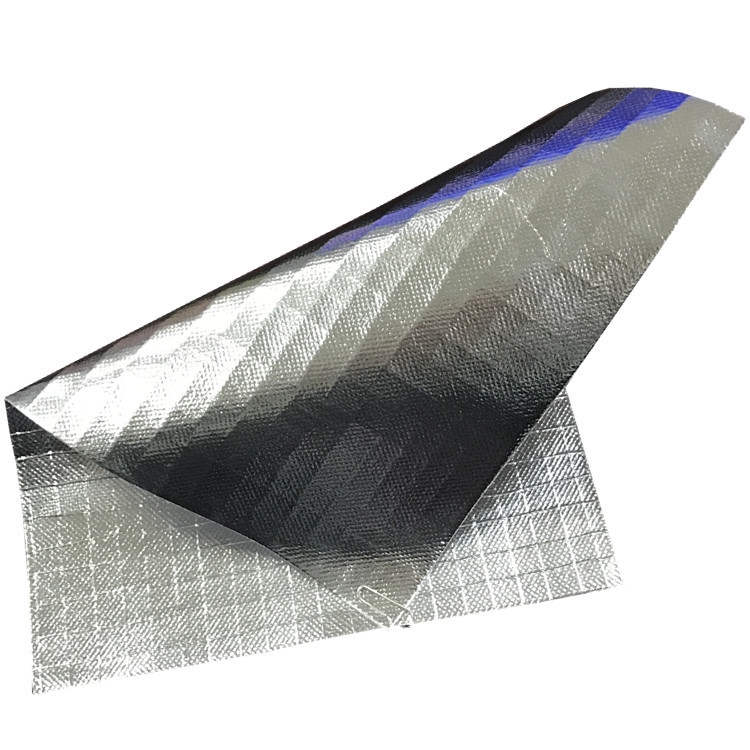
Choosing the correct layer configuration dictates long-term project success. Let us review the primary options available on the market today.
Contractors primarily use this configuration for standard roof sarking applications. It sits perfectly beneath concrete tiles or corrugated metal sheeting. Reflection is only necessary in one direction for these specific jobs. The shiny side usually faces outward or upward toward the hot sun. It remains highly cost-effective for large residential housing developments. It also offers lower overall material weight. Workers can carry these lighter rolls up ladders much faster.
This robust option suits high-performance building envelopes perfectly. Large agricultural sheds and extreme climate zones benefit greatly from dual layers. It rejects intense summer heat while facing outward. It also retains expensive winter heating while facing inward. Assess the specific temperature volatility of your geographic region carefully. Decide if the second metalized layer justifies the slight cost premium.
Feature | Single-Sided Woven Foil | Double-Sided Woven Foil |
|---|---|---|
Primary Function | Radiant heat rejection (One-way) | Heat rejection & retention (Two-way) |
Best Application | Standard residential roof sarking | Agricultural sheds, severe climates |
Material Weight | Lighter (Easier handling) | Slightly heavier (More robust) |
Cost Profile | Highly cost-effective | 20-30% premium pricing |
You must verify technical specifications before ordering bulk quantities. Rely on independent laboratory testing rather than vague supplier promises. Evaluate these four critical metrics to ensure structural integrity.
Reflectivity vs. Emissivity: Target independently tested reflectivity between 95% and 97%. Emissivity ratings must sit strictly below 0.05. These numbers guarantee genuine radiant barrier performance. Avoid suppliers who hide exact figures or provide outdated test reports.
Grammage (GSM) and Thickness: The weight of the material dictates its physical endurance. Standard residential roofing requires 100 to 150 GSM. Heavy-duty commercial or industrial roofing demands 150+ GSM. Higher GSM yields significantly better puncture resistance.
Tensile and Tear Strength: Always verify burst strength and edge-tear metrics. The material must survive severe wind loads during storms. It must also handle heavy contractor foot traffic across roof battens without yielding.
Fire Retardancy (FR) Compliance: This metric remains completely non-negotiable for any commercial project. Ensure your chosen material meets strict local codes like ASTM E84 or AS/NZS 1530.2. Proper FR compliance effectively prevents flame spread across the vulnerable roof cavity.
Project Category | Recommended GSM Target | Durability Expectation |
|---|---|---|
Residential Sarking | 100 - 130 GSM | Standard wind loads, moderate traffic |
Commercial Roofing | 130 - 160 GSM | High wind loads, heavy foot traffic |
Heavy Industrial/Agri | 160+ GSM | Extreme structural stress, exposed use |
Even premium materials fail entirely without proper installation techniques. You must understand the physics governing the roofing system. Common installation errors lead directly to trapped moisture and ruined interiors.
Reflective surfaces do not work dynamically by themselves. They require a minimum 20mm to 25mm adjacent air space. The material simply conducts heat without this clear gap. An air gap ensures radiant heat reflects away efficiently. Never sandwich the foil tightly between two solid building materials. You will destroy its primary insulating capability immediately.
Trapped moisture causes massive structural rot and mold growth. You must specify the correct permeability for the site. Project demands vary aggressively by climate zone. You can select either a perforated (breathable) or unperforated (vapor barrier) woven fabric. Assess your existing attic ventilation strategy carefully before choosing. Cold climates often require breathable membranes to let trapped winter moisture escape harmlessly.
Heat loss often happens exactly at the seams. Moisture penetration occurs there too. You must overlap adjacent sheets by 100mm to 150mm. Seal every single overlap securely using reinforced aluminum foil tape. Use a plastic squeegee to press the tape down firmly. This eliminates microscopic air channels and ensures a permanent bond.
Best Practice: Tape all accidental tears immediately using compatible foil tape before continuing the installation.
Best Practice: Maintain consistent tension during rollout to prevent sagging, which can compromise the required air gap.
Common Mistake: Ignoring the air gap rule and compressing the foil directly against fiberglass batts.
Common Mistake: Using standard duct tape instead of specialized acrylic foil tape for seam sealing. Standard tapes degrade quickly in hot attics.
B2B procurement demands strict vetting and diligent background checks. You need reliable manufacturing partners for large-scale commercial construction projects. Late shipments or failed quality tests can derail an entire building schedule.
Legitimate suppliers provide recent laboratory test reports willingly. Look for accredited third-party thermal performance and fire safety data. Question any supplier delaying the release of these critical documents. Insist on verifying ISO 9001 manufacturing standards to ensure batch-to-batch consistency.
Construction roof spans vary wildly from site to site. Evaluate a supplier's ability to offer custom roll widths. Standard widths typically range from 1.2m to 1.5m. Custom lengths minimize job site waste significantly. Less waste directly improves your overall project profitability and reduces dumpster fees.
Factor in Minimum Order Quantities carefully when planning inventory. Factory-direct imports often require 50 to 100 rolls per order. Align these MOQs against your immediate project timelines. Account for international shipping delays during peak construction seasons. Establish clear communication regarding freight handling and pallet configurations.
Selecting the ideal roof membrane requires careful architectural matching. You must align the GSM and side configuration to your exact structural demands. Vapor permeability must suit the local climate zone precisely. Never evaluate a roofing product solely on the cheapest unit price available. Prioritize mechanical tear strength and certified fire safety instead. Following these steps when specifying thermal insulation layers prevents costly post-installation failures. Your roofing system will remain durable, safe, and highly energy-efficient for decades.
A: Not intrinsically. Reflective insulation does not have a high standalone R-value (which measures conductive resistance). Its "System R-value" depends entirely on the surrounding air space and installation method.
A: It can, if installed incorrectly. If acting as a vapor barrier in a cold climate without proper attic ventilation, moisture can accumulate. Breathable (perforated) versions or proper ventilation strategies are required.
A: For pure durability and structural tear resistance during roof installation, woven fabric is superior. Bubble foil provides a slight internal air gap but is generally bulkier and more prone to puncturing under mechanical stress.


